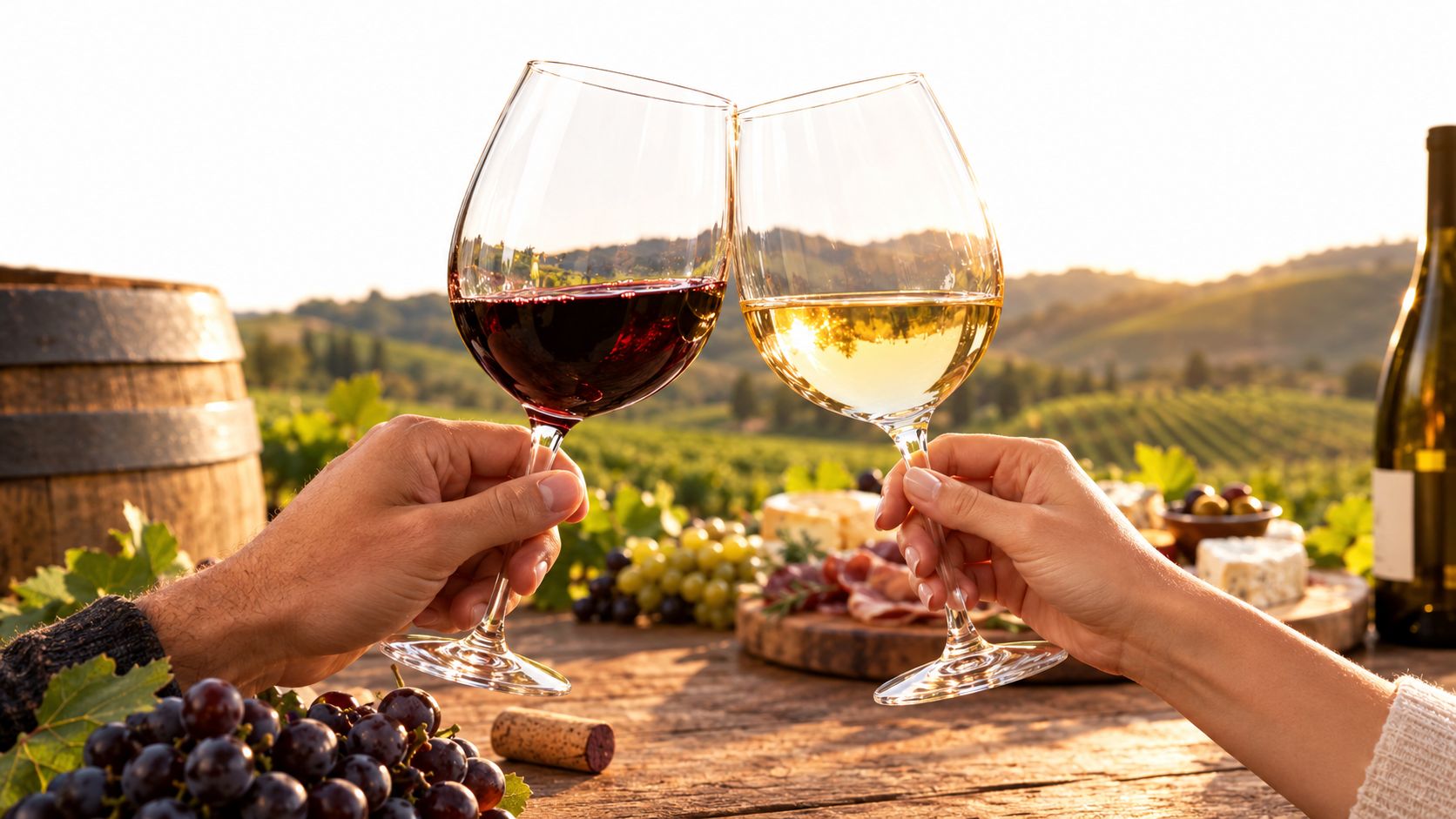
Mountaintop Wine Tasting Sonoma: Your 2026 Guide
July 16, 2026•Visit & Tastings
A lot of Sonoma trips start the same way. A few tabs are open, several tasting rooms look appealing, and the main question is whether a standard seated flight is enough for a day that's supposed to feel memorable.
For travelers who want more than a bar pour and a quick swirl, a mountaintop tasting changes the pace of the visit. The setting becomes part of the wine. The drive, the exposure, the wind, the light, and the distance above the valley floor all shape what ends up in the glass and how the tasting feels.
That's why mountaintop wine tasting in Sonoma stands apart. It isn't only about a better view. It's about seeing the vineyard context that explains the wine, then building an entire day around that experience so the visit feels intentional instead of rushed. Visitors who want to make this kind of experience part of a longer relationship with the estate can join the Sonoma wine club for allocations and member access throughout the year.
Beyond the Tasting Room An Introduction
Most visitors know the classic tasting room scene. A host pours a flight, a few groups talk over each other, and the room can feel busy before the first sip is finished. That format can still be enjoyable, but it rarely gives the sense of place that makes Sonoma Valley so compelling.
A mountaintop tasting works differently. The experience starts with leaving the main hospitality space behind and moving into the natural setting itself. The route up matters. The shift in temperature matters. The changing angle of the vineyard rows matters. By the time guests reach the tasting site, the wines already make more sense because the land is no longer an abstract backdrop.

That's where this style of visit becomes memorable. Instead of tasting a finished product, guests trace the connection between site and bottle in real time. A private perch changes how people notice the wind, the dryness of the air, and the way afternoon light sits on the hillsides.
Why the setting matters
A scenic tasting isn't automatically a better tasting. Some premium experiences lean so hard on the panorama that the wine becomes secondary. The strongest mountaintop visits do both well. They keep the hospitality polished, but they also make the vineyard setting do real interpretive work.
Practical rule: If the drive up teaches guests something about the site, the tasting usually lands better than one that treats the mountain as a photo stop.
A useful case study is Kunde Family Winery. The estate was established in 1904 and has grown into a 1,850-acre estate producing 100% estate-grown wine, with vineyards continuously cultivated since 1879 using cuttings from legendary Bordeaux chateaus. The estate's continuity across five generations is part of what gives the visit depth, because the land is tied to a long operating history rather than a newly built hospitality concept, as noted in this profile of Jeff Kunde.
What makes this kind of visit stick
Mountaintop wine tasting in Sonoma appeals most to travelers who want one anchor experience instead of several interchangeable stops. That usually includes:
- People celebrating something specific who want a visit with a built-in sense of occasion.
- Wine drinkers who care about vineyard origin and want to understand why site conditions show up in flavor and structure.
- Travel planners building a full day who would rather center the itinerary around one destination with depth than squeeze in too many appointments.
The trade-off is simple. These tastings take more planning and more time than a casual walk-in style visit. But when the goal is an unforgettable Sonoma Valley day, that extra effort usually pays off.
How Elevation Changes Everything
The easiest mistake in talking about mountain wine is making it sound mystical. It isn't. Elevation affects vine conditions in visible, practical ways, and those conditions influence how grapes ripen.
The most useful way to think about it is this. Valley-floor vineyards and higher-elevation vineyards can sit in the same region while living through very different days. Fog, airflow, sun exposure, and nighttime cooling don't arrive with the same rhythm. That difference shapes grape development long before a bottle is opened.

Above the fog line changes the day
Around 1,400 feet, vineyards can sit out of all but the thickest summer fog, which means long, warm days and cool, dry nights. That microclimatic pattern is important for grape development and wine complexity compared with lower valley sites, according to Sonoma Valley Wine's discussion of winemaking at this elevation.
That point matters more than many visitors realize. Fog doesn't just change the view. It changes how long vines spend in direct sun and how quickly a site warms up in the morning. When grapes spend more of the day in a steady, favorable ripening window, the fruit can develop differently than fruit from a lower site that stays under marine influence longer.
What that means in the glass
A mountaintop tasting becomes more interesting once guests know what to look for. Several vineyard effects tend to shape how the wine presents itself.
- Sun exposure influences flavor development. More sustained warmth during the day helps grapes move toward ripeness without the same pattern seen on lower, foggier sites.
- Cool nights slow things down. That helps grapes hold freshness and keeps ripening from becoming flat or one-dimensional.
- Dryer nighttime conditions reduce stress swings. Vines experience a more stable rhythm when the site avoids abrupt temperature changes.
Higher elevation doesn't guarantee better wine. It creates a different set of growing conditions, and skilled farming has to turn those conditions into balance.
Terroir becomes easier to understand on a mountain
“Terroir” can sound vague until a guest stands on the site and notices how concrete it really is. It's the combination of place factors that shape the wine, not a romantic slogan. On a mountaintop, those place factors become visible.
A practical way to read the scene is to focus on four things:
Air movement
Mountain sites often feel more ventilated. That airflow affects heat retention and the general growing environment.Temperature rhythm
Warm afternoons and cooler evenings create a daily contrast that can support complexity.Drainage
Higher sites often shed water differently than flatter ground, which can influence vine behavior and fruit concentration.Exposure
The angle and duration of sunlight on hillside fruit changes how grapes mature.
What works and what doesn't during the tasting
Guests often get more out of mountaintop wine tasting in Sonoma when they taste with site conditions in mind instead of hunting for textbook notes.
What works:
- Ask where the fruit was grown on the estate.
- Compare structure and freshness, not just fruit character.
- Pay attention to texture, density, and finish.
What doesn't:
- Treat the tasting like a speed round.
- Spend the whole time photographing the view.
- Assume elevation is only a branding detail.
The view is the draw. The microclimate is the reason the visit matters.
Planning Your Sonoma Mountaintop Tasting
The difference between a smooth day and a frustrating one usually comes down to planning details that are easy to overlook. Mountaintop tastings aren't casual drop-ins. They involve transportation logistics, timing discipline, and a little more forethought than a standard seated reservation.
That sounds demanding, but the payoff is a day that feels relaxed once it starts.

Book the experience before building the rest of the day
For this type of visit, the tasting should go on the calendar first. Lunch, hikes, check-in times, and any second winery stop should come after. A mountaintop appointment is less flexible than a casual tasting because there's usually a coordinated transportation component and a more structured host-led flow.
Travelers looking at Kunde visit options should confirm the experience details directly before arranging the rest of the day.
The best planning move is to treat the tasting as the anchor, not an add-on.
Questions worth asking at booking
Not every question needs a long email exchange. A short, practical check saves trouble later.
- Accessibility needs: Ask how guests with mobility concerns are accommodated.
- Footwear expectations: Confirm whether the route or deck access calls for sturdier shoes.
- Weather exposure: Ask how much of the experience takes place outdoors.
- Group composition: Make sure the format fits the group's pace and expectations.
- Pet policies: Don't assume a pet-friendly estate means every experience allows dogs in every area.
What to wear and what to bring
Visitors often overcorrect in one direction. They either dress as if they're attending a formal indoor tasting or as if they're going on a full outdoor trek. Mountaintop tastings usually sit in the middle.
A practical packing list looks like this:
- Layers: Conditions can shift once the group leaves the valley floor.
- Sensible shoes: Fashion-forward footwear is fine until gravel, stairs, or uneven surfaces appear.
- Sunglasses: Intense light can feel sharper and brighter.
- A light outer layer: Even warm days can feel breezy at an exposed deck.
- A charged phone: Helpful for photos, maps, and post-tasting coordination.
Transportation decisions that make the day easier
Responsible tasting starts before the first pour. If the day includes more than one stop, travelers should settle transportation in advance instead of improvising after the tasting.
Some groups prefer a hired driver. Others use a dedicated designated driver. Either approach works better than trying to solve transport after a long afternoon. Parking also tends to be easiest when guests arrive a bit early, check in calmly, and avoid stacking the day too tightly.
Kunde Mountaintop Tasting At a Glance
| Attribute | Details |
|---|---|
| Experience style | Guided mountaintop tasting experience |
| Reservation approach | Advance booking is the smart move |
| Setting | Elevated tasting environment on the estate |
| Best wardrobe strategy | Layers and stable shoes |
| Transportation mindset | Plan for responsible tasting before arrival |
| Ideal day structure | Use the tasting as the main anchor for the itinerary |
The visitors who enjoy these experiences most aren't the ones who overprogram every hour. They're the ones who leave enough breathing room for the mountain drive, the tasting conversation, and the simple fact that a special Sonoma stop should never feel rushed.
The Kunde Mountaintop Experience A Walkthrough
The strongest way to approach this tasting is to expect a progression, not a single event. It starts with arrival, but it doesn't peak until the group is well above the main winery setting and the valley opens up below.
The check-in portion tends to feel familiar at first. Guests arrive at the estate, get oriented, and shift from standard tasting-room mode into something more guided. That change matters because the mountaintop format asks for attention. It rewards guests who are ready to follow the pacing instead of trying to squeeze the visit into a packed schedule.

The ascent is part of the tasting
The ride upward is where the experience starts separating itself from a conventional reservation. The roads, the vineyard blocks, and the changing perspective all do narrative work. Guests move through the estate rather than looking at it from one static patio.
That drive is important because it establishes context before any detailed wine discussion begins. As the valley floor drops away, the relationship between exposure, slope, and vineyard position becomes easier to grasp. Even travelers with no technical wine background can feel the site change.
Arrival at the tasting deck
The reveal is the private tasting deck at 1,400 feet, and that location is not just scenic. The Kunde Mountain Top Wine Tasting is a 2-hour journey to that deck, where the elevation sits above the marine fog layer and creates moderate temperatures that minimize grape stress and enhance flavor concentration, leading to wines with superior structure and density, according to this overview of the experience.
That's the point where mountaintop wine tasting in Sonoma usually clicks for guests. The view explains the geography. The air explains part of the farming challenge. The wine explains why any of it matters.
A private deck changes the emotional tone of a tasting. People slow down. They listen more closely. They tend to taste with more attention.
What guests usually notice first
The first response is often visual, and that's natural. Sonoma Valley from above has a breadth that a lower tasting-room view rarely matches. But once that initial moment passes, most guests notice the quieter rhythm of the tasting itself.
There's less background noise. Fewer distractions. More opportunity to connect the pour to the exact place where the fruit was grown.
That quieter format is one reason curated tastings often feel more personal even without becoming overly formal.
Why the wines feel different in this setting
Some tastings rely on atmosphere to make ordinary pours feel more premium. That approach doesn't hold up well with experienced travelers. A stronger mountaintop experience ties the wine list to the site so the tasting feels coherent.
Guests should expect the wines to make more sense because they're being tasted close to their source. Estate-grown selections in this setting don't feel abstract. The guide can point to terrain, aspect, and elevation rather than speaking in vague branding language.
A practical way to move through the pours is to watch for:
- Structure: How firmly the wine holds together across the palate.
- Concentration: Whether the fruit feels compact and defined rather than broad and loose.
- Mineral or savory character: Often easier to notice when guests taste slowly outdoors.
- Finish: The part many rushed tasters miss, especially when the setting encourages conversation and pause.
What works best for visitors
A few habits improve the experience significantly.
- Arrive unrushed. A stressed late arrival carries into the whole tasting.
- Eat beforehand. Even a well-paced tasting lands better when guests start with a real base.
- Ask site-specific questions. Questions about where the fruit comes from are usually more rewarding than asking for generalized tasting-note shortcuts.
- Take fewer photos than expected. A handful is enough. The visit is better when the glass gets at least as much attention as the camera roll.
A mountaintop tasting works because it gives wine a physical setting. Guests aren't only hearing that elevation matters. They're sitting inside the proof.
Understanding Costs and Wine Club Benefits
A mountaintop tasting is a premium experience, and it should be evaluated that way. The right question isn't whether it costs more than a standard tasting. It usually will. The better question is what that higher-tier format includes and whether those elements matter to the traveler booking it.
In practical terms, guests are paying for more than wine. They're paying for coordinated transport within the estate, a guided setting, exclusive access to a private location, and a slower, more interpretive style of hospitality.

What creates the value
Travelers sometimes compare premium tastings only by the number of pours. That's too narrow. A mountaintop format often delivers value in less obvious ways.
- Private access: The setting itself is part of the experience.
- Host attention: A guided format usually creates better conversation and better pacing.
- Estate context: Guests learn why the site matters instead of tasting in isolation.
- Time quality: A longer, calmer experience often feels more worthwhile than a quick flight at a crowded bar.
Paying more makes sense when the experience adds access and understanding, not just another glass.
When a wine club makes sense
Wine club membership is most useful for visitors who expect the relationship to continue after the trip. If the mountaintop tasting introduces wines that guests want to revisit, club access can be the bridge between a memorable day and ongoing allocations.
For travelers considering Kunde's wine club membership options, the practical value usually falls into a few categories:
- Access to current releases and periodic allocations
- Potential tasting-related perks
- A simpler path to estate-grown wines after the visit
- A reason to stay connected to the winery between trips
One-time splurge or ongoing commitment
Not every visitor needs to join. For many travelers, the mountaintop tasting works perfectly as a single standout experience during a Sonoma weekend. That's especially true for guests who enjoy exploring a wide range of producers and don't want another recurring shipment.
Membership tends to fit a different profile. It suits people who tasted wines they know they'll want again, who appreciate estate continuity, and who like having a built-in excuse for future visits.
The cleanest decision framework is simple:
| Visitor type | Better fit |
|---|---|
| Wants one memorable Sonoma highlight | Mountaintop tasting only |
| Wants continued access after the trip | Tasting plus club consideration |
| Prefers flexible, no-commitment travel | One-time experience |
| Enjoys repeat shipments and estate follow-up | Club may add value |
The smart move is to decide after the tasting, not before it. If the site, wines, and hospitality resonate, the membership question becomes much easier.
Building a Perfect Day in Sonoma Valley
A mountaintop tasting shouldn't be squeezed between random errands. It works best as the centerpiece of the day, with the rest of the itinerary built to support its pace. That means a light morning, a well-timed lunch, and enough breathing room afterward that nobody feels pushed into the next stop.
The easiest mistake is overbooking. A mountain experience already gives the day shape, scenery, and a sense of occasion. Trying to stack too much on top of it usually weakens the overall trip.
A day plan that actually works
A balanced Sonoma Valley day around this kind of tasting often looks like this:
- Morning outdoors: Start with an easy nature-focused activity nearby, such as a relaxed trail outing in the Sonoma Valley area. Keep it short enough that everyone stays fresh.
- Late-morning reset: Head back, change if needed, and have a small snack before the tasting.
- Midday main event: Use the mountaintop tasting as the central reservation.
- Late lunch: After the tasting, settle into a comfortable meal in Kenwood rather than rushing straight into another wine stop.
- Flexible afternoon: Leave room for a scenic drive, downtime at the lodging, or one additional low-intensity activity.
That sequence works because each piece supports the next one. The morning creates appetite and energy. The tasting delivers the day's highlight. Lunch gives the experience a graceful landing.
Why this pacing feels better than a winery marathon
There's a strong case for doing less in Sonoma Valley. One exceptional tasting with context usually creates a stronger memory than several interchangeable appointments. Guests stay more present, conversations get better, and the day doesn't collapse into palate fatigue.
A mountain visit also pairs well with private celebration travel. Couples, small groups, and returning Sonoma visitors often want depth over volume. That's exactly where a mountaintop format shines.
The most satisfying wine-country itineraries usually have one clear centerpiece. Everything else should support it, not compete with it.
For groups planning something more customized around the tasting, private group experiences at Kunde can help shape a day that feels coordinated rather than pieced together at the last minute.
The result is a Sonoma outing that feels grounded in place. Not just scenic. Not just indulgent. Organized, memorable, and easy to enjoy.
A mountaintop tasting is the kind of Sonoma experience that rewards planning. For travelers ready to build a day around vineyard views, estate-grown wines, and a more immersive visit, Kunde Winery is a practical place to start.