Wineries in Kenwood CA Tasting Guide and Itineraries
September 15, 2026•Visit & Tastings
You've got a short window in Kenwood, one hungry group, and too many tasting-room tabs open on your phone. The wrong plan turns into a lot of driving, a rushed pour, and a stop that feels generic. The right plan turns Kenwood into the cleanest wine day in Sonoma Valley, especially if the goal is estate fruit, real history, and a tasting room that feels tied to the land.
Kenwood works best when visitors stop thinking in terms of a random list of wineries and start thinking in terms of estate continuity, reservation strategy, and comparison tasting. This part of Sonoma Valley isn't built for loud, loose wandering the way many first-timers expect. It rewards a tighter plan, a clear booking order, and a willingness to choose quality over quantity.
| Winery | Tasting Format | Reservations | Signature Wines | Best For |
|---|---|---|---|---|
| Kunde Family Winery | Standing bar, seated, guided experiences | Required for select experiences | Old Vine Zinfandel, Cabernet Sauvignon | Estate depth, comparative tasting |
| Other Kenwood tasting rooms | Walk-in friendly or reservation recommended, depending on the room | Varies by winery and format | Varies by producer | Flexible stops and spontaneous visits |
| Appointment-only estate experiences | Hosted tastings and booked visits | Reservation-based | Estate-led selections | Guests who want structure and fewer surprises |
Introduction to Tasting in Kenwood
A couple pulls into Kenwood after a late breakfast in Sonoma, thinking they'll wing it. The first tasting room looks open, the second says reservations are recommended, and the third wants a booking before anyone is seated. That's the Kenwood problem, and it's also why this guide matters.
Kenwood is not a copy of Napa, and it's not just a sleepy Sonoma side street either. The tasting here leans more heavily toward estate fruit, vineyard history, and direct visitor experiences, so the right question is not where to taste, but what kind of tasting day makes sense. Some stops suit quick bar pours and flexible timing. Others pay off only when the visit is booked, paced, and used for comparison.
What matters most on a Kenwood day
The best Kenwood plans start with three choices. First, decide whether the day is about walk-in flexibility or hosted depth. Second, pick one anchor stop that gives the day structure. Third, leave room for a second tasting that adds contrast instead of repeating the same style.
Practical rule: In Kenwood, a good itinerary is usually more valuable than a long one.
That's especially true because the area rewards visitors who care about estate sourcing and old-vine character. A tasting here should answer a few simple questions quickly. Does the winery feel rooted in the region? Does the booking model fit the time available? Does the pour justify the stop, or is it just a name on a map?
For readers trying to choose between spontaneous drop-ins and something more deliberate, this guide keeps the decision simple. Start with the anchor estate, use the comparison section to narrow the rest, and book around the way the day unfolds. That approach beats chasing a full list every time.
Where Kenwood Fits in Sonoma Valley
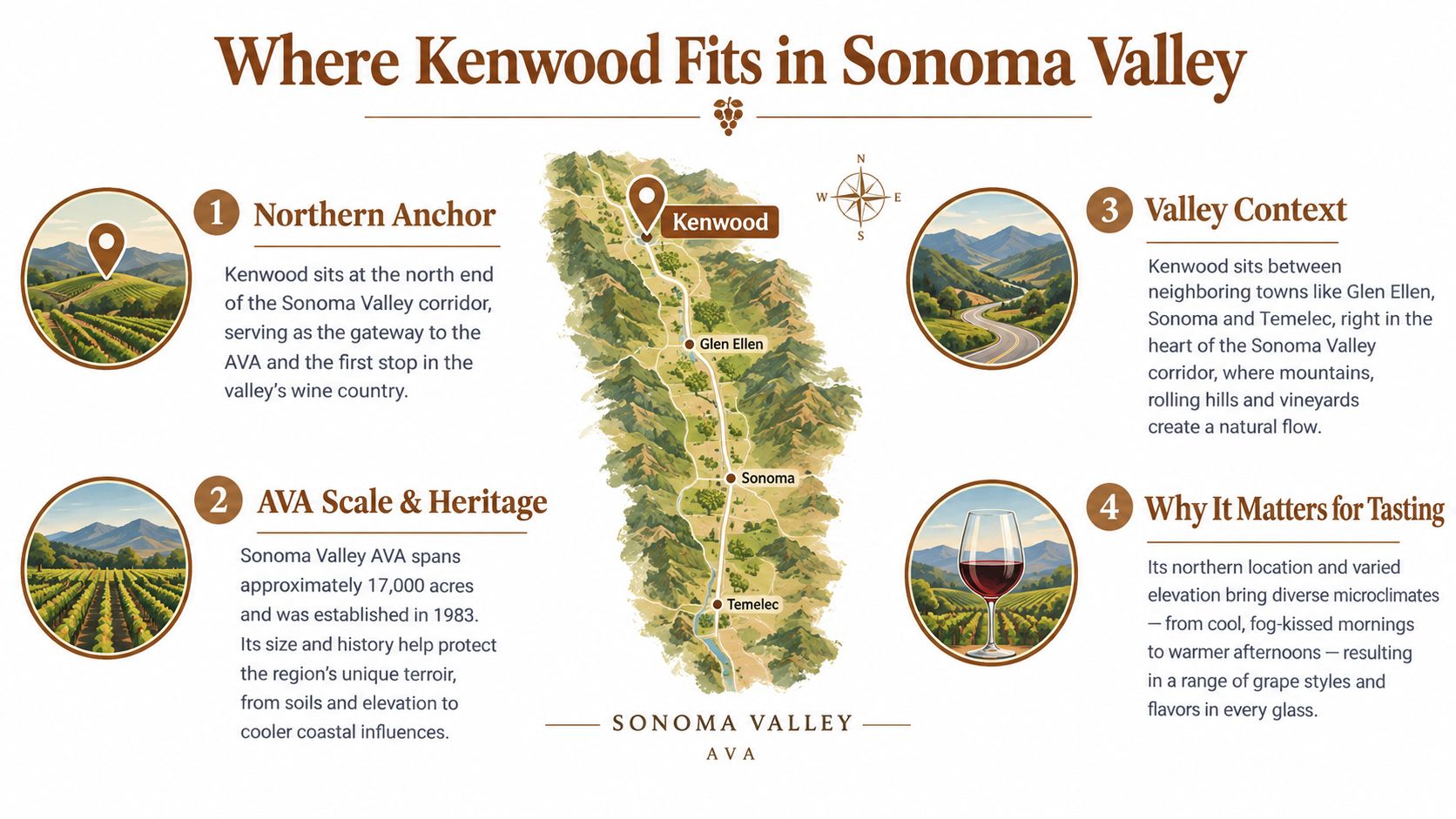
Kenwood sits in the northern end of the Sonoma Valley wine region, an American Viticultural Area designated in 1981 that spans about 72,402 acres with roughly 13,000 to 14,000 acres under vine and more than 80 wineries (Sonoma Valley AVA overview). That scale explains the feel on the ground. Kenwood has depth, steady vineyard identity, and enough history that estate fruit is part of the default conversation, not a marketing add-on.
Why the northern edge matters
Kenwood sits at the north end of Sonoma Valley, and the valley runs from San Pablo Bay up to Kenwood. That makes Kenwood a clean place to start or finish a tasting day built around the valley's geography. If you want the region to make sense as a place, the layout becomes obvious.
The history is real, not decorative. Kenwood's wine sites reflect more than a century of use, and the Kunde estate was first planted in 1879. Sonoma County historic-resources documentation also notes that the Pagani Brothers Winery on the Kenwood site was established in 1906 after Amedeo Pagani bought the property in 1905 (Kenwood, California history). That kind of continuity matters because it shapes how the tastings feel. You are not just sampling current releases, you are tasting a property with a long working record.
Kenwood also rewards visitors who care about estate sourcing and vineyard context. Estate fruit, direct hospitality, and site-driven stories set the tone here. For visitors comparing Kenwood with stops that are less tied to the vineyard, that difference is the point.
The site story is what makes the tasting conversation worth having.
For a clearer read on estate-grown wines in the valley, start with this Sonoma Valley estate-grown overview. It matches Kenwood's practical appeal, historic ground, agricultural focus, and wineries that still want you to taste where the fruit comes from.
How Kenwood Wineries Compare at a Glance
Kenwood is easiest to judge by visit style. Some tasting rooms are built for a quick stop, with flexible arrivals and a looser pace. Others run on appointments and give you a slower, more structured flight. That split matters here because reservation policies are uneven, so you need to choose the right stop for the kind of day you want.
Side-by-side planning logic
Wine clubs now drive a large share of winery direct-to-consumer sales in the U.S. wine sector, and tasting-room visitors often convert to membership at a modest clip (SVB direct-to-consumer wine report). That makes format a business decision, not just a convenience. The wineries that book cleanly and follow through with a clear club pitch usually make the strongest case for a return visit.
| Winery | Tasting Format | Reservations | Signature Wines | Best For |
|---|---|---|---|---|
| Kunde Family Winery | Standing bar, seated, guided experiences | Required for select experiences | Old Vine Zinfandel, Cabernet Sauvignon | Estate depth and comparison tasting |
| Kenwood tasting rooms with flexible policies | Walk-ins or reservations recommended | Varies | Regional reds and mixed programs | Spontaneous visitors |
| Appointment-led estate stops | Hosted, scheduled tastings | Required | Estate-grown bottlings | Guests who want a quieter, more deliberate visit |
For readers who care about glassware as much as the pour, find the Vinoteque wine glass by Luigi. A proper Cabernet stem gives structured reds more room to show detail, and that is the point here. Kenwood rewards guests who pay attention to how a wine is presented, not just what is in the bottle.
Bottom line: Pick the stop that matches the tasting you actually want, not the one that is easiest to click through online.
Walk-in-friendly rooms suit visitors who want flexibility and are fine adjusting on the fly. Reservation-led rooms suit people who want a paced flight, a set host, and less chance of being turned away. Kunde belongs in the second group for select experiences, which is why it works as the benchmark estate for Kenwood.
Kunde Winery as the Anchor Estate Experience
Kunde is the stop that gives Kenwood its shape. The estate sits in Sonoma Valley with 1,850-acre scale, five generations of family stewardship, and a vineyard history that reaches back to 1879 (Sonoma County Sonoma Valley wine region page). That continuity matters because it gives Kenwood a reference point, not just a tasting room.
Why the estate model matters here
Kunde's estate materials describe a contiguous property with 750 acres planted to vine, 18 different varieties, and vineyards rising from the Sonoma Valley floor to 1,400 feet across 7 microclimates (Kunde Family materials). That is the kind of setup that makes comparison tasting worthwhile. Elevation, exposure, and site variation show up in the glass, especially with Cabernet Sauvignon and Old Vine Zinfandel.
Treat Kunde as the benchmark stop, then judge the rest of Kenwood against it. If you start here, the day has a standard. If you end here, the final pour still gives you a clear frame for what the area does well.
The visitor model matches that approach. Kunde runs a public tasting room, offers club allocations, hosts on-site events, and sells wines through its online shop. Some experiences are reservation-based, and the cancellation rule is clear, so book ahead instead of assuming a walk-in will work. For a current look at the visit structure, use the Kunde visit page. For context on the estate's recent ownership reporting, find Korbel Kenwood acquisition report.
The older estate story still matters because it explains why Kunde carries so much weight in Kenwood. It combines continuity, scale, and a tasting format that shows the property's differences without overcomplicating the visit. Use it as the anchor, then choose the rest of your stops based on whether you want walk-in flexibility or deeper, appointment-led depth.
Planning Your Route Parking and Accessibility
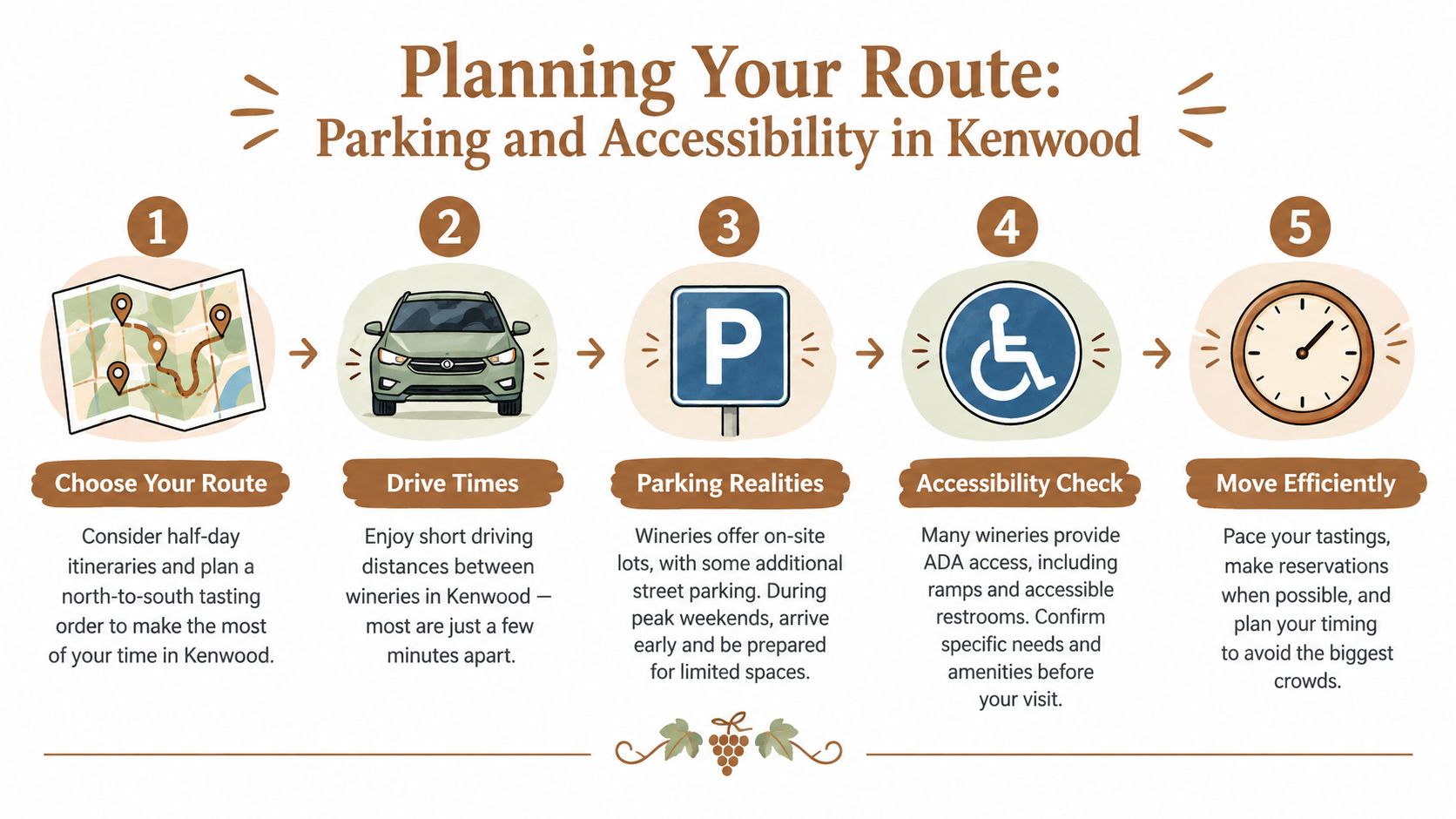
Kenwood rewards a simple route. Start with the stop that has the strictest reservation window, then work outward so you are not backtracking or watching the clock between tastings. A half-day here is usually the right call. It leaves room for parking, a real break, and one estate done well instead of three rushed visits.
A practical way to move through the area
If your first booking is in Kenwood proper, begin there and keep the route compact. That cuts drive time and makes the day feel controlled instead of scattered. Leave space between stops for photos, water, and lunch. Tight schedules cause problems fast.
Parking is easiest when you book early and treat reservation language as firm. If a tasting room says reservations are recommended or required, plan on booking. Weekends are where loose planning breaks down.
Practical rule: If the tasting room page mentions reservations, book first and build the rest of the day around it.
Accessibility deserves a quick check before you go. Confirm whether the tasting is seated, standing, or mixed, and ask whether the property can handle your group comfortably. That matters for older guests, mixed-mobility groups, and anyone who wants a low-stress visit.
Use a short checklist:
- Book the first tasting first: Secure the anchor stop before adding anything else.
- Confirm the format: Standing bar pours and seated tastings are not the same experience.
- Check cancellation terms: Some visits use a 48-hour cancellation rule, so read the fine print before you commit.
- Leave time between stops: Even short drives get messy when the schedule is too tight.
- Keep the route compact: One strong day beats three rushed pours.
For current booking details, the Kunde visit page is the clearest place to start. Use it to set the timing, then build the rest of your Kenwood day around that first reservation.
Tasting Tips Events and Membership Value in Practice
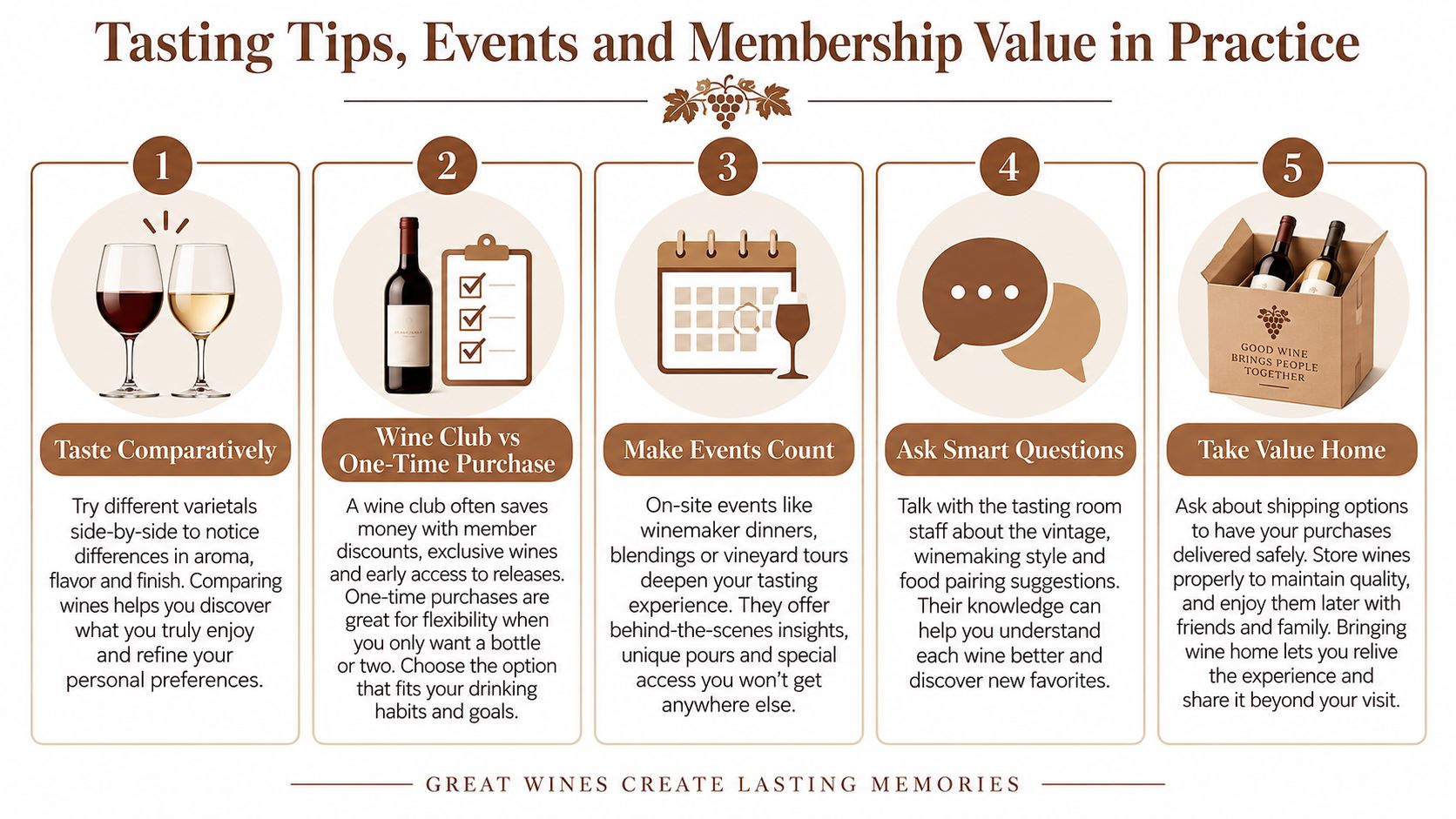
Kenwood pays off when visitors taste with a purpose. A flight should show differences, not just fill a table. Ask for comparative pours when the room allows it, and pay attention to which wines feel like bottles you would buy again.
How to get more out of the tasting room
A quick stop should stay focused on the estate's core reds, not on trying to sample everything. Cabernet and Zinfandel comparisons make sense here. On a slower visit, ask how vineyard site, elevation, and blending choices shape the wine in the glass.
Wine clubs make sense when the winery's style already fits your palate and you want repeat access, allocations, or limited releases. The broader DTC picture supports that approach, and club-based buying has a clear place in the wine business, as shown in the SVB report. The test is simple. Does the tasting room make you want to come back for the same wines?
If club value is the main question, the Sonoma Valley wine club benefits overview explains how allocations and repeat buying work in a valley like this. That structure matters more than a one-time promotional pour. Collectors want access, while casual tasters usually want one or two memorable bottles and no obligation.
Ask for the bottle that best shows the vineyard, not the bottle that sounds the loudest on the menu.
On-site events work best when the goal is time in a winery setting rather than a pure tasting mission. For a special occasion, they can turn a wine stop into the center of the day. For a one-off visitor, the tasting room stays the cleaner choice because it keeps the focus on the wine itself.
Use the membership discussion to judge value with discipline, not sentiment. If the wines fit your cellar and the access feels useful, membership can earn its place. If it does not, buy the bottle that clarified the visit and leave the rest alone.
Where to Eat Stay and What to Book Next
The best Kenwood day pairs one anchor tasting with one easy follow-up, then leaves space for lunch and a slower finish. Visitors who want the least friction should book Kunde first, keep the route compact, and choose a meal plan that doesn't force a long drive between tastings. That approach works for first-time visitors, estate Cabernet fans, and anyone who wants the clearest value from a single day.
For trip planning, it helps to think in terms of timing and energy, not just winery names. A relaxed stay in Sonoma keeps the whole day grounded, while a more resort-style base pushes the trip toward longer pacing. A useful guide to that wider weekend logic is Global Vacation Rentals' weekend getaways planning resource, which fits the same basic principle. Good wine days usually come from good overnight logistics.
For visitors who want a simple recommendation, the order is straightforward:
- First-time visitors: Start with Kunde, then add one flexible stop if the schedule still feels light.
- Estate Cabernet fans: Prioritize the anchor estate and keep the rest of the day comparative, not crowded.
- Walk-in-friendly days: Use one open-format stop and one booked experience, never the other way around.
The cleanest next step is to book the anchor tasting first, confirm the cancellation terms, and build the rest of the day around one meal and one backup option. If preferred times are full, it's better to shorten the route than to force a weak substitute. Kenwood rewards decisiveness.
Kunde Winery gives Kenwood its clearest estate story, with vineyard continuity, bookable tasting options, and wines that make sense when tasted against the land they came from. For visitors planning a Sonoma Valley day around history, comparison tasting, and practical reservations, Kunde Winery is the natural place to start.


