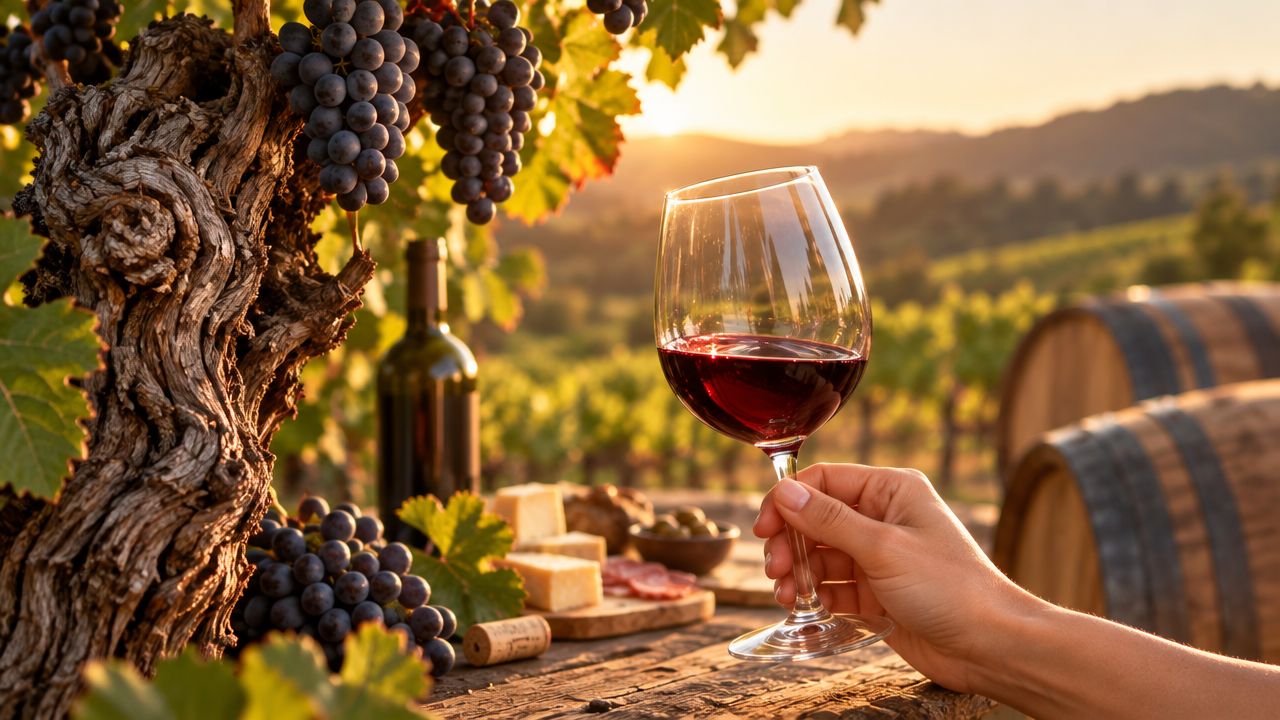
Falcon Crest TV Show Real Filming Locations Wine Country
September 1, 2026•Wine & Vineyard
A visitor arrives in Napa with a familiar plan: find the gate, take the photo, taste the wine, and leave with proof of having stood at the “real” Falcon Crest winery. That plan usually breaks down because the television estate never existed as one tourable property. The Falcon Crest TV show real filming locations in wine country form a regional story, with verified Napa sites, supporting Sonoma scenery, Hollywood interiors, and modern estates such as Kunde that belong in the itinerary for different reasons.
The CBS drama aired for nine seasons from 1981 to 1990 according to the production location record. Its fictional Tuscany Valley looked coherent on screen because production combined several places into one dramatic world. A practical visit works best when fans stop searching for a single branded attraction and instead follow the geography, access rules, and current character of the wine country.
Why Falcon Crest Was Never One Single Estate
The confusion begins at a roadside gate. A fan sees a grand entrance, a vineyard rising behind it, and a mansion that resembles Angela Channing's estate. The camera comes out immediately, often before anyone checks whether the property is open, whether the building appeared in the series, or whether the scene was filmed there at all.
Falcon Crest was a fictional place assembled from real Northern California locations and production facilities. Spring Mountain Vineyard in St. Helena supplied the series' central exterior identity, including the 1884 Victorian mansion Villa Miravalle, which served as the exterior of Angela Channing's estate as recorded in IMDb's location information. The show also used Napa and Sonoma Valley scenery to represent the invented Tuscany Valley, while interior work moved to Los Angeles.
That production method created a convincing television geography. Viewers saw one powerful wine dynasty, but the production team was working with separate estates, town locations, regional roads, and interior sets. The result feels like a single property only because editing connects images that visitors encounter miles apart.

The myth that keeps sending fans to the wrong gate
The durable myth is simple: somewhere in wine country, a complete Falcon Crest winery remains available for touring. The verified reality is more useful but less tidy. Spring Mountain Vineyard is the closest match to the show's signature exterior, yet it wasn't the only property connected to the series, and it shouldn't be treated as a preserved television attraction.
Production accounts describe outdoor filming at the primary estate for about six weeks each summer, followed by interior production in Los Angeles as outlined by the Falcon Crest production archive. That limited, recurring schedule helps explain why the location story is fragmented. The estate was a filming location, not a permanent studio or a branded fan venue.
Visitors researching the subject often find lists that blend confirmed locations with visual lookalikes. A more reliable approach separates three questions:
- Where did the exterior estate scenes originate? Spring Mountain Vineyard in St. Helena.
- Where did winery interiors come from? Inglenook Vineyards in Rutherford, with additional interior production elsewhere.
- What makes a useful modern visit? A combination of verified exterior geography and current estate experiences, including the broader Sonoma Valley estate-grown wine landscape.
The distinction matters because an itinerary built around one supposed winery can waste driving time and create awkward encounters with private property. The show's legacy is regional, not confined to one address.
The Napa Valley Sites That Became Falcon Crest
Napa works best as a sequence of contrasting stops rather than a hunt for one front door. The visitor sees the most recognizable exterior association at Spring Mountain, understands the show's winery imagery through Rutherford, and treats town and rural references with the caution required by incomplete public access.
Start with the primary exterior estate
Spring Mountain Vineyard in St. Helena is the essential exterior stop. The property's historic Villa Miravalle mansion supplied the outside image of Angela Channing's estate, and the surrounding hillside vineyards provided the atmosphere that made the fictional Tuscany Valley feel established and powerful per the verified IMDb location record.
The estate sits on Spring Mountain Road above St. Helena. A visitor shouldn't assume that the public road provides a full view or that a gate signals public access. Private vineyard roads, residences, and working agricultural areas require respect, and any tasting or property visit must be arranged through the estate's current channels.
The practical reward is visual context. From lawful viewpoints along the surrounding road network, the hillside setting explains why the production chose the property. The mansion's architecture and the elevation of the vines do more for a fan than an unverified list of supposed “Falcon Crest” buildings.
Add Rutherford for the interior winery connection
Inglenook Vineyards in Rutherford belongs in the itinerary for a different reason. The production used the property for interior winery scenes, while Spring Mountain supplied the defining exterior estate image. This split is one of the most important corrections for travelers who expect every interior doorway to be at Spring Mountain.
A scheduled visit can provide an authentic Rutherford estate experience, but the visitor shouldn't enter restricted areas looking for a television set. Current tasting formats, access to historic buildings, and photography rules can change, so reservations and official visitor information should determine the stop.
Treat town references as a walking supplement
St. Helena storefronts and other Napa-area settings helped create the show's Tuscany Valley world, but a fan should distinguish a recognizable town scene from a dedicated attraction. Downtown streets can be viewed from public areas, while private businesses and residences should be treated as ordinary working places rather than fan exhibits.
Some location lists also assign early harvest or rural sequences to Napa-side Carneros settings. Those references belong on a flexible route, not a promise of a precise public landmark. Agricultural parcels change use, gates remain closed, and a scene's final appearance may combine several nearby views.
| Location | Address | Key Falcon Crest Scenes | Visitor Access |
|---|---|---|---|
| Spring Mountain Vineyard | Spring Mountain Road, St. Helena, Napa Valley | Exterior estate views and Villa Miravalle as Angela Channing's estate | Gated estate. Use lawful public-road views and arrange any property visit in advance |
| Inglenook Vineyards | Rutherford, Napa Valley | Interior winery scenes | Visit only through current estate booking and access policies |
| St. Helena town settings | Downtown St. Helena, Napa Valley | Tuscany Valley storefront and town imagery | Public streets and businesses, with normal visitor etiquette |
| Napa-area rural locations | Napa Valley and Carneros area | Harvest and special rural sequences cited in production accounts | Varies by parcel. Don't trespass or stop on unsafe shoulders |
The interiors that look most convincingly Napa may never have been Napa at all. Los Angeles soundstages and production facilities supplied the controlled indoor work, which is why a visitor won't find a complete, intact Falcon Crest set among the vineyards.
Sonoma and Other California Locations That Made the Cut
Sonoma belongs on the map, but it shouldn't replace the verified Napa stops. Production records identify additional locations in Sonoma County, including Sonoma Raceway for an episode, while other Napa and Sonoma settings expanded the fictional Tuscany Valley beyond the flagship estate as recorded in IMDb's production locations.
The best way to approach Sonoma is as a scenic extension. Sonoma Plaza offers a public, walkable setting where visitors can absorb the town character that television productions often need, while the roads through Sonoma Valley provide the slower agricultural scenery that made the region useful for driving sequences. Kenwood and Glen Ellen properties are frequently associated with vineyard and barrel-room imagery, but the current status of each property matters more than an old fan-site label. Some remain active tasting venues, others are private, and some have changed their visitor arrangements.
What fans can realistically see
Public tasting rooms and village streets are the dependable elements. A visitor can stop in a town center, use marked pullouts where available, and reserve a tasting at an estate that welcomes guests. A camera should never become a reason to block a driveway, walk onto a private vineyard lane, or photograph workers without permission.
Russian River and Bodega Bay references are better treated as atmospheric add-ons than as required Falcon Crest stops. Coastal roads and second-unit scenery can reward a longer drive, but they don't offer a single definitive television landmark. The trade-off is clear: the farther the route spreads, the more regional texture it gains and the less likely it becomes that every stop will deliver a recognizable screen image.
For readers extending the Sonoma portion toward Dry Creek Valley, a practical guide to Dry Creek Valley Cabernet can help frame the area's wine identity without confusing it with the show's verified filming geography. It's useful background for choosing a tasting style, not evidence that a particular property appeared in the series.
Kunde fits naturally into this broader Sonoma plan, especially for travelers deciding whether Napa or Sonoma wine tasting is better for a trip. The strongest Sonoma day pairs one or two verified scenic references with a current estate appointment, rather than filling the schedule with uncertain location claims.
Road rule: Secondary filming sites reward unhurried driving, but they rarely justify trespassing or a long detour by themselves.
Where Kunde Winery Fits in the Falcon Crest Story
Kunde Winery appears in Falcon Crest searches because its Sonoma Valley setting looks like the television version of wine country. Hillsides, vines, historic agricultural surroundings, and the Kenwood area can evoke the same visual language as the series. That resemblance, however, isn't proof of filming.
The record is explicit: Kunde Family Winery was not a Falcon Crest filming location as the winery explains in its location guide. The verified Napa properties tied directly to the production are Spring Mountain Vineyard, especially for the exterior estate identity, and Inglenook Vineyards for interior winery scenes. Kunde should therefore be positioned as an authentic Sonoma estate anchor, not as the fictional Falcon Crest Winery.
Why the search confusion persists
Online location lists often compress a composite television world into one destination. Once a Sonoma estate resembles the show visually, later pages repeat the association, and travelers inherit a simplified map. The problem isn't that Kunde lacks relevance. The problem is that its relevance is contemporary and regional, while the filming claim is historical and specific.
Kunde offers a meaningful contrast to the television myth. Its estate-grown wines come from grapes cultivated on the property, and the winery operates a public tasting room with scheduled experiences for guests 21 and older, according to the publisher's estate information. The property's vineyard history reaches back to 1879, with documented family involvement dating to 1904, and the estate remains under five generations of Kunde family stewardship as described by the winery.
Those details make the property useful for travelers who want the wine-country setting to stand on its own. A tasting appointment can provide structured access to current estate wines, while the surrounding hillside views echo the broad visual mood that drew viewers to Falcon Crest in the first place. Visitors who want to continue the relationship beyond a single tasting can explore the Sonoma wine club for allocations and member events.
The right role in a Sonoma detour
Kunde works after the Napa filming locations, not instead of them. Visitors should confirm current tasting room hours, reservation requirements, event schedules, and route conditions through official channels before setting out. The property's current visitor experience is the attraction, while the television connection is context.
That distinction improves the day. Fans get the verified production story in Napa, then experience a working Sonoma estate without pretending it is a preserved set. The itinerary becomes more honest and more enjoyable.
Building a Falcon Crest Inspired Wine Country Itinerary
A workable route groups stops by geography and alternates photography with seated tastings. The mistake is trying to turn every location reference into a full appointment. A public-road view may take minutes, while a tasting requires a reserved block of time, responsible transportation, and enough margin for a conversation that runs longer than expected.
A focused one-day version
A single day should stay compact. Begin with a Napa or St. Helena base, then choose the verified location that matters most to the group.
- Morning exterior context: Drive toward Spring Mountain Road and view the estate setting only from lawful public areas unless a confirmed appointment provides access.
- Midday town stop: Walk through central St. Helena, where public streets and storefronts offer a sense of the town imagery without turning ordinary businesses into a film attraction.
- Afternoon estate appointment: Reserve a tasting at a current Napa property, ideally one that complements the historic estate theme rather than claiming an unverified Falcon Crest identity.
- Evening reset: Finish with dinner near the lodging base instead of adding a distant Sonoma detour.
This plan works for travelers who want the main exterior association and a relaxed tasting. It doesn't work for anyone expecting to tour every supposed location in one sweep.
The stronger two-day route
Two days allow the production geography to breathe. The first day can focus on St. Helena and Rutherford, with Spring Mountain as the visual centerpiece and Inglenook as the interior-location connection. The second day can move into Sonoma Valley, using public town scenery and one scheduled estate visit.
Lunch should sit between the photo stop and the tasting, not immediately before a rushed appointment. A designated driver or professionally arranged transportation is preferable when the itinerary includes multiple tastings. Ride-share coverage can vary in rural areas, so relying on an unplanned pickup is a weak strategy.
The three-day version
A third day makes room for Sonoma's slower roads, Kenwood and Glen Ellen context, and optional Russian River or coastal scenery. These areas should be selected according to interest, weather, and access, not because every one carries equal documentary certainty.
| Day | Primary Region | Filming Sites | Pairing Winery |
|---|---|---|---|
| Day one | St. Helena and Rutherford | Spring Mountain exterior context, Inglenook interior connection | Reserved Napa estate tasting |
| Day two | Sonoma Valley | Sonoma town scenery, Kenwood and Glen Ellen supporting locations | Kunde estate tasting |
| Day three | Wider Sonoma and optional coast | Sonoma County references, rural and atmospheric add-ons | A prebooked Sonoma appointment suited to the route |
Booking logic that keeps the route realistic
Book the anchor tasting first, then shape the driving around it. Private estates and gated vineyards shouldn't be treated as flexible drop-in stops, and public-road photography should never be scheduled so tightly that a visitor feels pressured to stop illegally.
The most satisfying itinerary has empty space. That margin covers a slow drive, a closed gate, a missed turn, or a tasting room conversation that turns the television story into local history rather than a checklist.
Practical Tips for Visiting Falcon Crest Sites in 2026
A 2026 visit needs a different mindset from an old fan pilgrimage. The television locations are part of working wine country, and access depends on current reservations, private-property boundaries, road safety, and the operating calendar of each estate.
A visitor who arrives without a booking may still enjoy public scenery, but shouldn't expect a tasting room to absorb an unscheduled group. Appointment-based hospitality is common across Napa and Sonoma, particularly at properties where staff manage limited seating and guided experiences.

The access decisions that matter
- Private estates: Confirm the appointment before driving up a gated road. A historic mansion or vineyard view doesn't create public access.
- Public viewpoints: Use marked pullouts, sidewalks, and lawful road edges. Don't stop where a vehicle blocks farm traffic or creates a hazard.
- Weekend parking: Reach town centers early or choose lodging with transport support. Popular streets and tasting-room lots can become difficult once visitor traffic builds.
- 2026 reservations: Check official booking portals before finalizing the route, especially for the primary Napa estate experience and the Sonoma anchor.
- Designated transport: Use a designated driver or arranged transportation when tasting is central to the day. A ride-share pickup in a rural vineyard area shouldn't be assumed.
- Weather checks: Late-summer heat, smoke, and shifting road conditions can affect outdoor photography and hillside driving. Confirm conditions before leaving lodging.
Etiquette at family-run properties
Family-owned estates often combine hospitality with active agricultural work. Clean, practical clothing suits vineyard roads, while neat casual dress works better for seated tastings and historic rooms. Guests should follow photography instructions, avoid wandering beyond the hosted route, and ask before filming staff or other visitors.
The best question isn't “Where is the set?” It's “Which parts of the property are available to guests today?” That wording respects the difference between a production location and a public attraction.
What the Falcon Crest Legacy Looks Like Today
Falcon Crest survives as a production map, not a single visitor attraction. The series ran for nine seasons from 1981 to 1990 as documented in its production record, while Spring Mountain Vineyard remains the strongest physical association because Villa Miravalle supplied the exterior image of Angela Channing's estate.
Napa and Sonoma have changed since the original run. Private vineyards manage access around working agriculture, residences, and visitor schedules, and no official tour presents the series as one complete attraction. Fans can still follow the production geography along Highway 29, the Silverado Trail, Spring Mountain roads, Sonoma Valley routes, and other California settings. Plan for self-guided driving, lawful viewpoints, and confirmed estate reservations.
A useful visit brings together three layers: a respectful look toward the verified exterior setting, context for the Inglenook interior connection, and a current tasting at a working Napa or Sonoma estate. Tasting-room staff may share local memories, but their role is hospitality rather than production history.
The goal is to understand how a fictional wine dynasty gained visual authority from real places, then experience those places as active vineyards and visitor destinations.
Kunde Winery provides a scheduled Sonoma Valley tasting centered on estate-grown wines, with current visitor details available through its official channels. For a Falcon Crest inspired trip combining verified Napa filming sites with a modern Sonoma estate experience, reserve Kunde Winery and build the driving route around that appointment.