Old Vine Zinfandel Sonoma Heritage and Tasting Guide
September 17, 2026•Wine & Vineyard
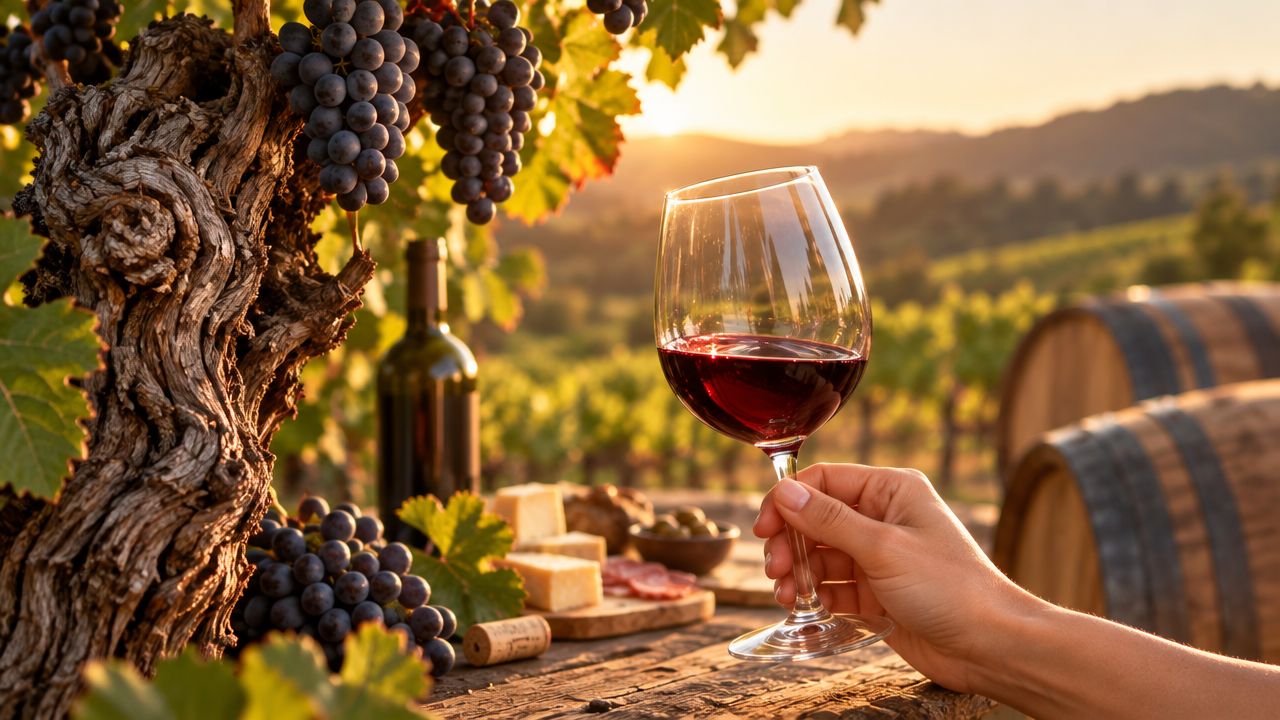
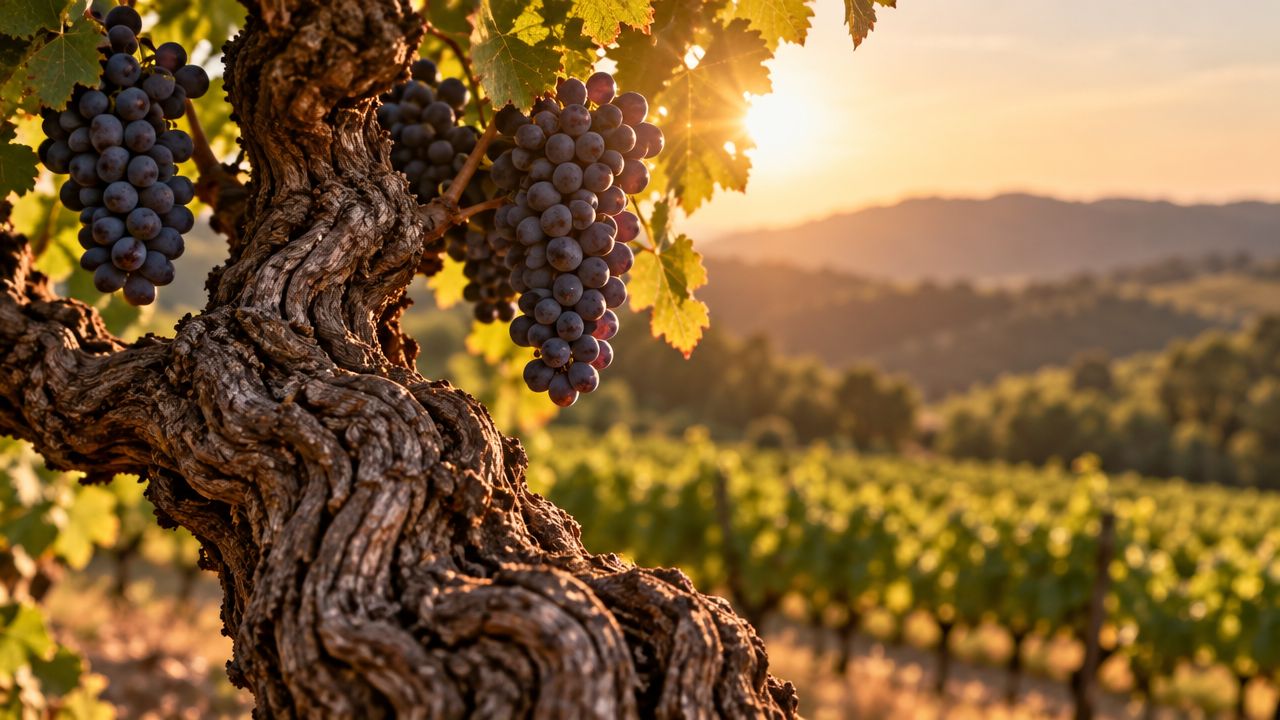
At Kunde's Century Vines, the trunks look less like garden stakes than weathered limbs, their bark folded into ridges beside clusters of Zinfandel. The vineyard's quiet authority comes from continuity, each harvest adding another page to a living record of Sonoma Valley.
Why Old Vine Zinfandel Defines Sonoma Valley
Sonoma Valley's old-vine Zinfandel begins with a contradiction. The vines appear fragile because their trunks are twisted, their arms irregular, and their crops often modest. Yet the surviving vineyards have endured pressures that would have erased less adaptable plantings, including Phylloxera, Prohibition, and two World Wars, according to Sonoma County Winegrowers' account of old-vine Zinfandel.
Kunde's Century Vines provide a useful reference point. The vineyard is tied to plantings from 1882, and Kunde's product information describes the historic site as 140-plus years old for the 2021 Reserve Century Vines Zinfandel. An independent historic-vineyard account identifies the Century Vines site as roughly 30 acres of Zinfandel planted in 1879, connecting the property to Sonoma's long agricultural timeline. Those dates aren't decoration on a label. They help a taster understand that the wine comes from vines established before modern vineyard uniformity, mechanization, and many of today's familiar grape-growing assumptions.
A heritage that survived change
Sonoma's relationship with Zinfandel is also a story of decline and recovery. The county emerged from Prohibition with about 10,000 acres of Zinfandel, but the total fell to fewer than 4,000 acres by the 1960s, as documented in the historical account linked by Sonoma County Winegrowers. By 1970, Napa and Sonoma together still had almost 4,000 acres of Zinfandel vines planted in 1959 or earlier, evidence that mature vineyards survived even as the wider market shifted.
Today, Zinfandel represents about 5,000 acres in Sonoma County, while a Sonoma County wine review describes the grape as accounting for 13 percent of current red vine plantings, compared with 40 percent in 1970. The numbers show why old-vine Zinfandel feels both abundant and rare. Sonoma still has a meaningful acreage base, but the variety no longer dominates.
For visitors and buyers, the appeal reaches beyond concentrated fruit. A bottle can connect heritage, site, farming skill, and preservation economics. The most useful question isn't whether every old vine automatically makes better wine. It's whether the vineyard's age, farming, and bottling choices create a distinctive expression that deserves attention.
What Old Vine Really Means for Zinfandel
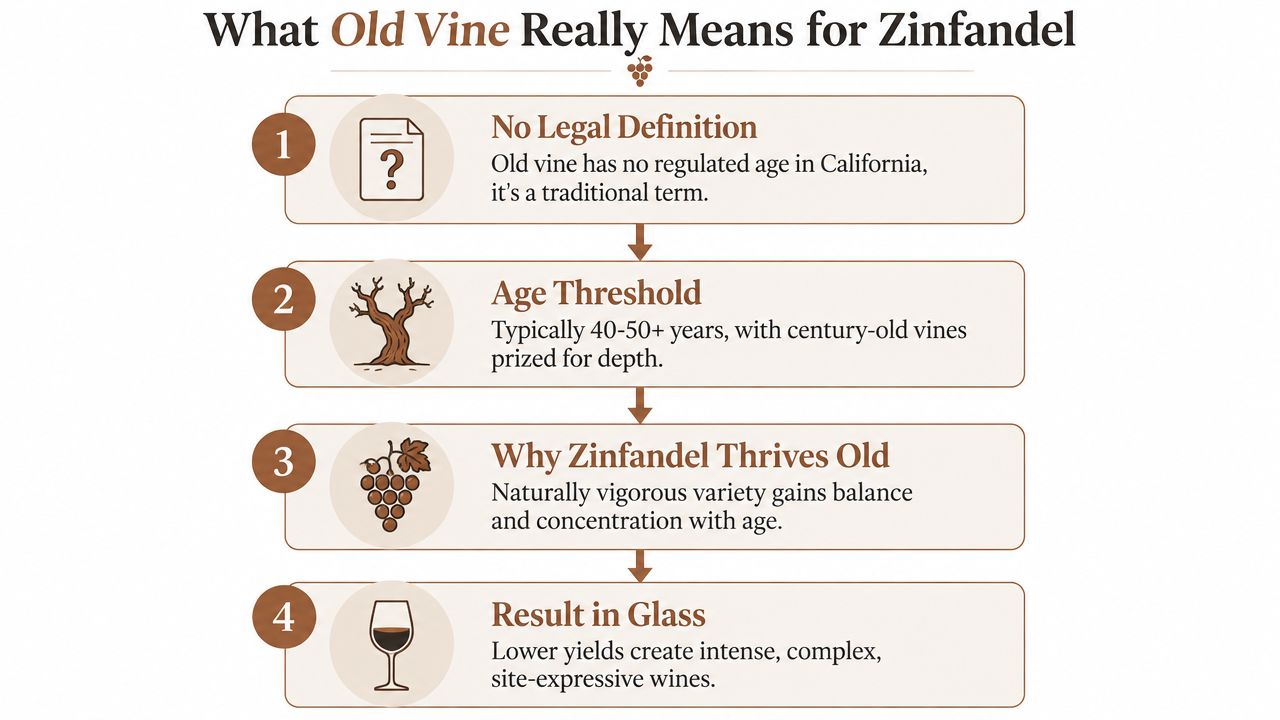
“Old vine” sounds precise, but California has no single regulated age threshold for the term. In everyday wine language, growers and producers commonly use it for mature plantings, often beginning around 40 or 50 years, while century-old vineyards occupy a more exceptional category. That distinction matters because a label can use the phrase without telling a reader exactly how old the vines are.
A simple analogy helps. A young vine behaves like a person still building a career, energetic and inclined to produce plenty of growth. An older vine resembles an experienced craftsperson. It may work with less outward force, but its growth is more measured, and its established root system can draw on soil and moisture at greater depth.
Age is a process, not a flavor guarantee
As Zinfandel vines age, they often become less vigorous in shoot growth and produce smaller crops. Smaller berries can bring a higher proportion of skins to juice, which may contribute to darker color, firmer structure, and more concentrated flavor. Those outcomes depend on the site, season, farming, and winemaking, so vine age alone can't guarantee a particular style.
Zinfandel also ripens unevenly. A single cluster may contain berries at different stages, which means vineyard teams must manage harvest decisions carefully. Old vines can bring balance to that natural exuberance, but they don't erase the variety's personality. The resulting wine may combine ripe blackberry and plum with pepper, acidity, tannin, and savory detail rather than tasting like simple sweet fruit.
What the phrase doesn't mean
Old vines aren't automatically ungrafted, dry-farmed, or planted in superior soil. Some historic vines grow on their own roots, while others may have been grafted or replanted in sections over time. A responsible buyer should look for supporting information, such as the vineyard's planting date, whether the wine is estate-grown, and how the producer defines the block.
The glass can reveal the practical effect of age more reliably than the phrase itself. Look for concentration without heaviness, texture that feels integrated rather than harsh, and layers that move from fruit toward spice, earth, and dried-fruit notes. The wine should still taste like Zinfandel, not like an abstract symbol of antiquity.
Practical rule: Treat “old vine” as an invitation to investigate, not as a guarantee of quality.
Sonoma Terroir and AVAs That Shape Old Vine Character
Vine age provides the timeline, but place supplies the accent. Sonoma Valley's old-vine Zinfandel reflects the interaction of sunlight, nighttime cooling, fog, slope, drainage, and soil. Two vineyards can share the same grape and similar age yet produce wines with noticeably different balance and aroma.
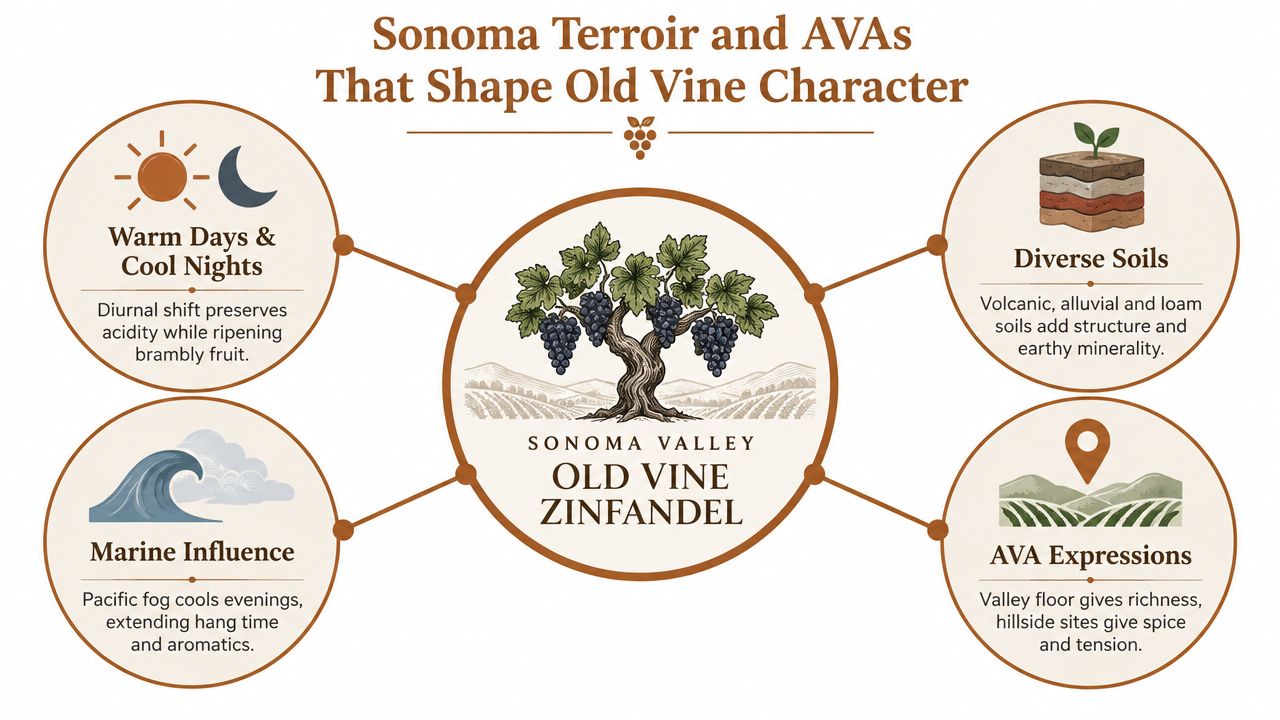
Sonoma Valley sits within a broader region influenced by the Pacific. Warm daylight helps Zinfandel develop ripe fruit, while cooler nights can preserve freshness. Marine influence doesn't make every vineyard taste the same, but it can slow the rhythm of ripening and support aromatic development. That tension between ripeness and lift is one reason Sonoma Zinfandel can feel generous without becoming merely sweet or heavy.
Soil and slope create different sentences
Volcanic soils can contribute a firm, mineral impression, while alluvial and loam soils may support broader fruit and a rounder sense of volume. These descriptions aren't rigid tasting formulas. Soil works through drainage, water availability, root development, and vine vigor, so its effect becomes clearer when considered with climate and topography.
A valley-floor vineyard often gives Zinfandel a plush, expansive shape because the site may retain more warmth and support stronger growth. Hillside vines can face greater exposure and drainage, producing wines that feel more savory, peppery, or tense. The distinction isn't a quality ranking. It's a difference in emphasis.
Why estate origin matters
Estate-grown fruit offers traceability. The producer can identify the vineyard, farming practices, and block history instead of treating the grapes as an anonymous regional ingredient. Kunde's property connects that traceability to a long timeline, with vineyard cultivation documented continuously since 1879, family involvement dating to 1904, and five generations of family stewardship described in the estate's background information.
That continuity gives the taster a way to read the wine as a place-specific object. A bottle from a named historic block carries more information than a broad regional label, especially when the producer shares planting dates and farming details. The old-vine character becomes part of a larger identity, Sonoma Valley expressed through a particular site rather than through a grape name alone.
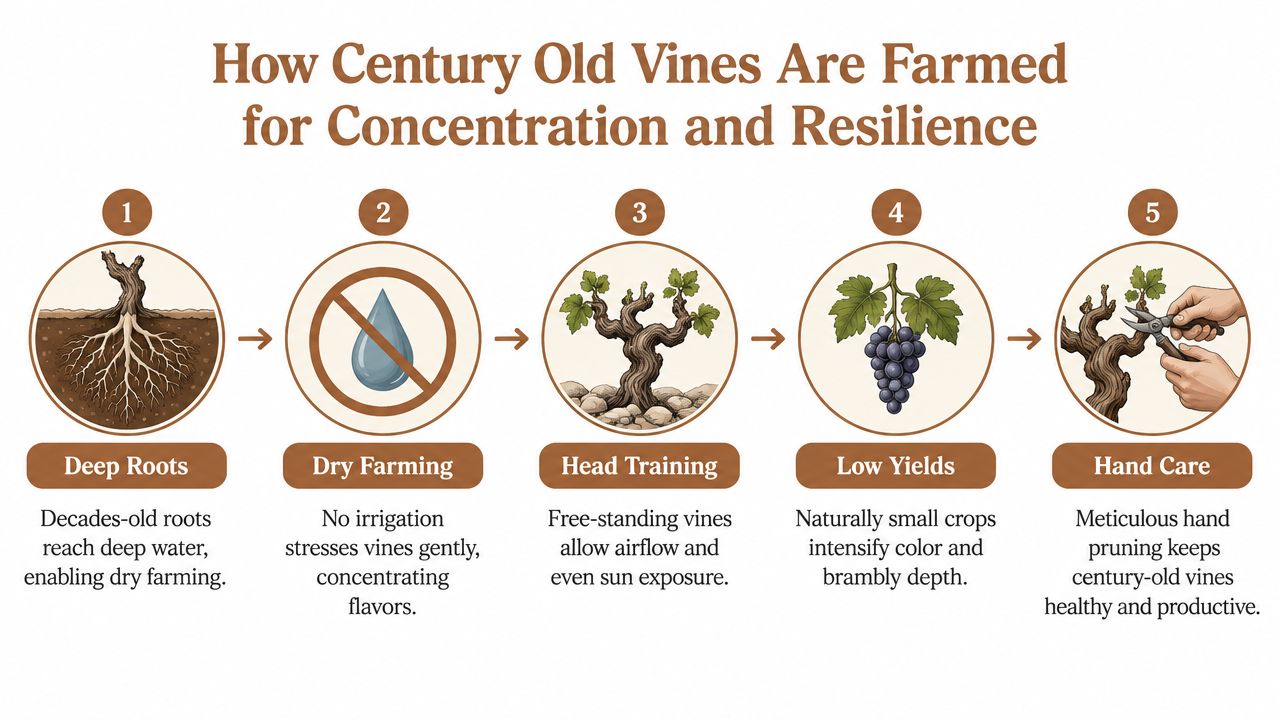
How Century Old Vines Are Farmed for Concentration and Resilience
Kunde's 140-plus-year-old Century Vines offer a living timeline for understanding old-vine Zinfandel. Their value is not their age. These are working plants, still managed for balanced growth, reliable ripening, and continued production. The goal is to respect their history while keeping each vine productive rather than preserving it as a museum piece.
A documented Sonoma vineyard planted in the 1880s continued to produce roughly 2.75 to 3 tons per acre without irrigation, according to coverage of the vineyard's long dry-farmed production. That result does not mean every old vineyard can survive without water. It shows how roots, soil, climate, and skilled management can work together over generations.
Farming choices work as a system
Deep roots can reach moisture below the shallow zone affected by frequent irrigation. Dry farming then asks the vine to adjust growth to the water naturally available at the site. In suitable conditions, that restraint can reduce excessive leaf and shoot growth and help fruit develop greater flavor density. It can also reduce crop size and increase seasonal risk.
Head training leaves vines free-standing instead of placing them within a tight trellis system. Their broad, irregular structure can support airflow and sun exposure, while hand pruning lets workers respond to the condition of individual trunks and spurs. A century-old block is not a row of identical young plants. Each vine carries its own record of wounds, replacement arms, and positions that still produce fruit.
Resilience has limits
Old roots may help vines respond to drought and heat, yet age does not make a vineyard invulnerable. Recent climate reporting describes declining climatic suitability for Napa and Sonoma under severe warming scenarios, more extreme fire-weather days, and a compressed Zinfandel harvest window. Growers may have to balance flavor development against rising alcohol. Recent climate coverage on California vineyard viability places old-vine resilience within that broader pressure.
Preservation also depends on economics. Mainstream Zinfandel demand has been weak for years, while premium old-vine bottles can sell for $60 to $80, according to recent reporting on California heritage vineyards. That creates a narrow premium market rather than broad financial security for every grower.
Kunde's guide to sustainable farming in Sonoma Valley connects estate stewardship with farming, conservation, and visitation. The larger lesson is clear: old vines remain in the ground when careful work and a viable market give growers a reason to preserve them.
Tasting Profile and Food Pairings for Sonoma Old Vine Zinfandel
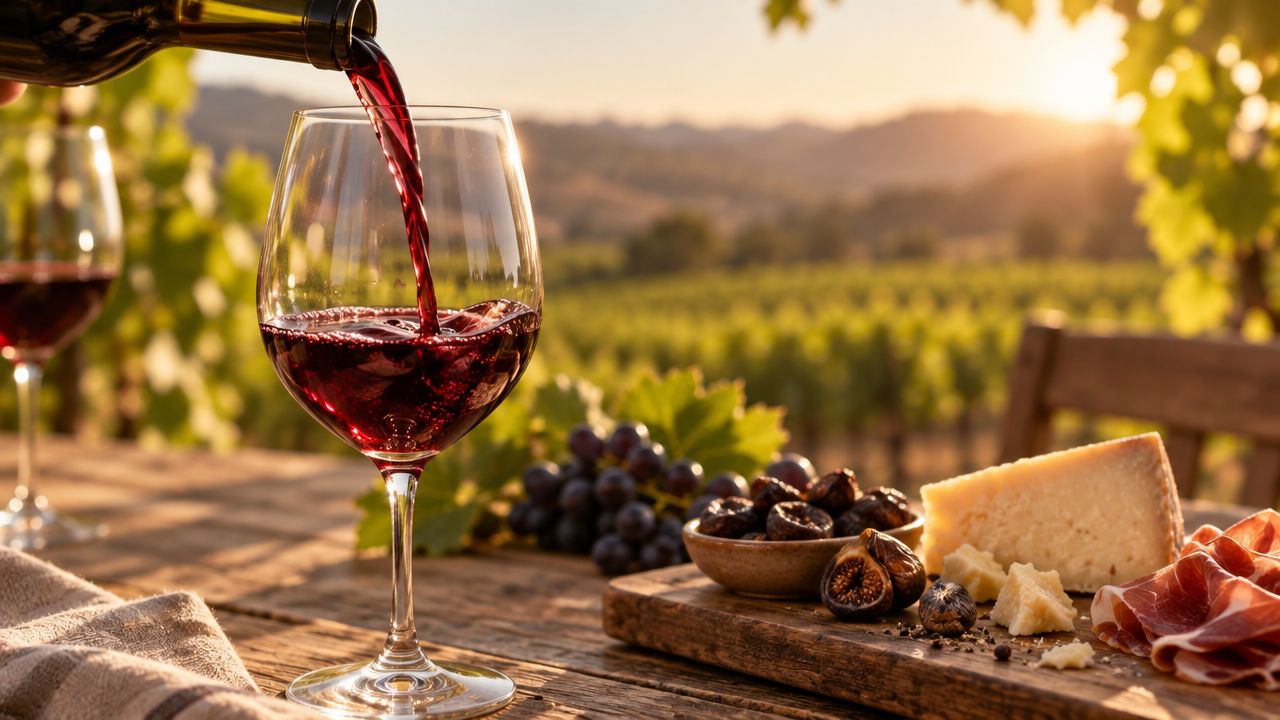
A Sonoma old-vine Zinfandel often announces itself with brambly blackberry, dark plum, and a warm, peppery edge. With air, the fruit can move toward dried fig, baking spice, earth, and cracked pepper. The best examples don't pile on ripeness. They develop in layers, with freshness and savory structure keeping the wine from feeling like fruit syrup.
A useful tasting exercise starts with the first sip before food. The taster should notice where the wine lands on the palate, whether the fruit feels bright or dense, and how the tannins behave after swallowing. Then a second sip can reveal whether the wine's concentration is balanced by acidity and whether the finish carries spice, earth, or dried-fruit complexity.
Pair the wine with savory weight
Zinfandel's fruit and pepper make it flexible at the table. A smoky barbecue glaze can echo its dark fruit, while the wine's acidity keeps fatty meat from becoming tiring. Braised beef, lamb, sausages, and slow-cooked mushrooms work for the same reason, they bring savory depth that meets the wine's structure.
Aged hard cheese offers another strong match. Salt amplifies fruit, fat softens tannin, and the cheese's nutty character can draw out the wine's earthy side. For a broader collection of meal ideas, Kunde's entrée recipes provide practical starting points for pairing estate Zinfandel with substantial food.
Serve for clarity, not ceremony
Slightly cool service can make a ripe Zinfandel feel more defined. A short period in a decanter may help a structured bottle open, especially if the first pour seems dominated by oak, alcohol, or tight tannin. The point isn't to follow a rigid ritual. It's to give the wine enough space to show both its fruit and its underlying shape.
A tasting flight can reveal the value of comparison. Serve an old-vine Sonoma Zinfandel beside a younger, fruit-forward example, then return to the older wine after food. Differences often become clearer at the table, where concentration, acidity, and texture have practical consequences rather than existing only as tasting-note vocabulary.
Notable Producers and Spotlight on Kunde Century Vines
Sonoma old-vine Zinfandel isn't a single style. Historic sites can produce wines that range from lush and blackberry-driven to peppery, savory, and structured. Some bottles focus on a single vineyard, while others draw from heritage plantings or field blends. The label's level of detail matters because “old vine” can describe a particular block, a blend of sites, or a broader house style.
A useful comparison starts with the producer's sourcing language:
| Label detail | What it helps clarify |
|---|---|
| Named vineyard | Whether the wine reflects a specific historic site |
| Planting date | The documented age of the vines |
| Estate-grown | Whether the grapes came from the producer's own property |
| Heritage blend | Whether several historic selections or varieties contribute |
| Vintage and bottling information | How the wine fits its production timeline |
Kunde as the reference vineyard
Kunde's Reserve Century Vines Zinfandel is tied to vines planted in 1882, and the estate's product sheet for the 2017 vintage lists the vines as 137 years old, with harvest from September 8 to 11, 2017, followed by bottling in May 2019. Kunde's 2021 product page describes the site as a historic 140-plus-year-old Sonoma Valley vineyard.
An independent historic-vineyard report identifies Kunde's Century Vines in Kenwood as approximately 30 acres of Zinfandel planted in 1879 by James Shaw, with the Kunde family purchasing the vineyard in 1904. The differing planting references reflect the way historic vineyards are documented across estate records and independent accounts, but both establish the essential point. Kunde's Century Vines belong to Sonoma's century-plus heritage.
The estate itself covers approximately 1,850 acres under family management and viticultural use, with five generations of documented stewardship. That scale allows visitors to connect a specific old-vine bottling to a broader working estate rather than viewing the wine as an isolated historical artifact.
Visiting and purchasing
Kunde's tasting room offers experiences for guests 21 and older, allowing visitors to evaluate current releases in a controlled setting. The estate also maintains a wine club with scheduled allocations and member communications, hosts on-site events listed through its calendar, and operates an online shop for available bottlings.
For readers comparing estate approaches and visitor experiences, Kunde's family winery guide provides additional background. The practical takeaway is to confirm current tasting availability, event details, and wine releases before planning a visit or placing an order.
Smart Buying Tasting and Collecting Tips
A thoughtful old-vine purchase starts with documentation, not dramatic language. Buyers should look for a planting year, a named vineyard or block, estate-grown wording, and an explanation of whether the wine comes from a single site or a blend. If the label offers only “old vine” without supporting detail, the tasting room or producer's product page may provide useful clarification.
Use a simple bottle check
- Verify the age claim: A documented planting date carries more meaning than an unexplained heritage phrase.
- Identify the source: Estate-grown fruit offers clearer vineyard traceability than an anonymous regional blend.
- Read the vintage: Zinfandel's balance can shift with harvest conditions, so vintage information helps frame expectations.
- Assess the style: Look for tasting notes that mention structure, acidity, spice, and savory detail alongside ripe fruit.
- Match the bottle to the occasion: A concentrated old-vine wine may suit a meal better than casual sipping.
Premium pricing also needs context. Recent coverage places high-end old-vine Zinfandel in the $60 to $80 per bottle range, while emphasizing that this remains a narrow premium niche rather than evidence of broad market strength in its discussion of heritage-vineyard economics. A higher price should correspond to transparent vineyard sourcing, careful farming, and a wine that delivers complexity in the glass.
Taste and store with intention
At a tasting, the buyer should ask when the vines were planted, whether the block is dry-farmed, how the wine was made, and whether allocations are available through a club or direct shop. Tasting side by side with another Zinfandel can reveal whether the older-vine bottling offers greater layering, more integrated tannin, or a riper profile.
For storage, keep bottles away from heat, light, and repeated temperature swings. Short-term bottles can be opened for a meal, while more structured examples may benefit from additional cellar time if the producer describes them as age-worthy. Buying from producers whose estate economics support continued vineyard care can also make the purchase part of preservation, because historic vines remain in production only when growers can keep farming them sustainably.
The strongest choice combines a verifiable vineyard story with a satisfying wine. That is the practical meaning of old vine Zinfandel Sonoma, a living agricultural history that still has to earn its place at the table.
Kunde Winery offers estate-grown Sonoma Valley wines, including the Reserve Century Vines Zinfandel, along with tasting room experiences for guests 21 and older, wine club allocations, on-site events, and direct online purchasing. Readers can plan a vineyard visit or explore current releases through Kunde Winery and taste the Century Vines story in its proper Sonoma Valley setting.


